
What Benefits Does Donating Blood Offer?
Donating blood can save multiple lives. It also offers benefits for you, like improved heart and emotional well-being.
1. Provides a Mini Health Check-Up
You’ll have to complete a quick physical before you give blood. A healthcare provider will measure your pulse, blood pressure, and hemoglobin levels.1
A healthcare provider collects your blood and sends it to a lab, where it’s tested for at least nine pathogens, such as HIV-1 and HIV-2. If any results are positive, you’ll be notified right away.2
These tests don’t replace your annual doctor’s visit, but they offer peace of mind. Avoid donating blood if you think you’re sick or have been exposed to a virus like HIV.
2. Supports Your Heart and Vascular System
Your blood will slowly flow if it has a high viscosity, or resistance to flow. Blood becomes less viscous, in contrast, if you donate it. This can result in easier blood flow.3
You may have a lower risk of cardiovascular disease due to the improved blood flow. Donating blood might result in a decrease in the lipid profile, which includes tests of coronary artery risk.4
Repeated blood donations can help the blood flow in a way that’s less damaging to the lining of the blood vessels and leads to fewer blockages.
3. Improves Emotional Well-Being
Donating blood may boost your emotional well-being. Helping others can be linked to:5
Lessened stress
Decreased negative feelings
A sense of belonging
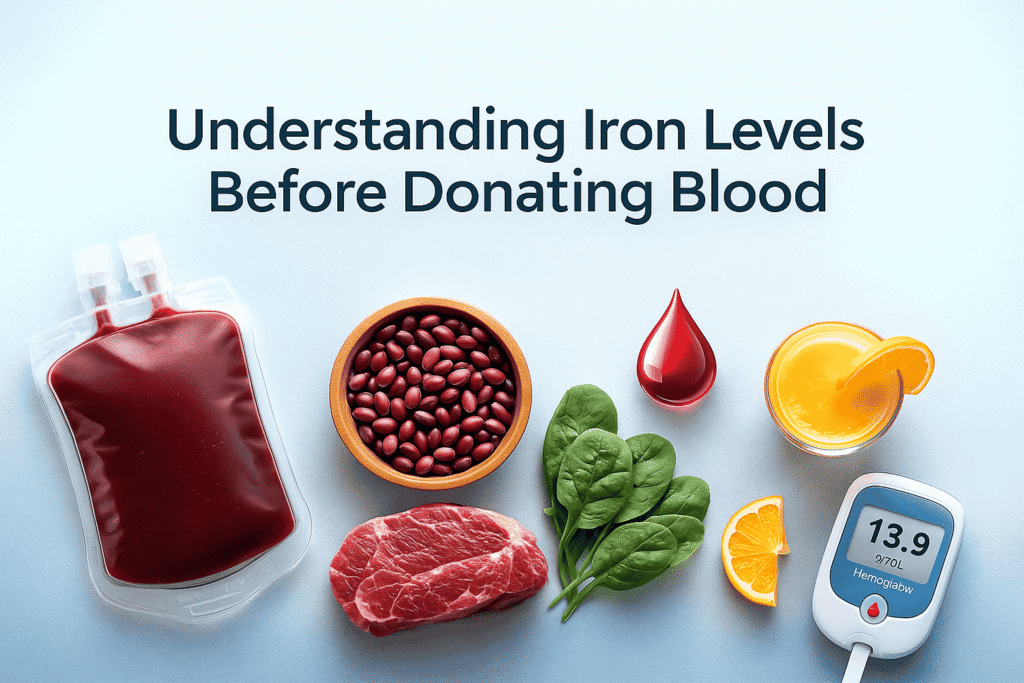
4. Keeps Iron in Check
Adults usually have about 3 -4 grams of iron in the body, mostly in red blood cells but also in bone marrow.6 Iron is needed for growth, development, and the transportation of oxygen to different parts of the body.
Having too little or too much iron in the blood can be harmful to your health. Hemochromatosis is a disorder caused by excessive iron accumulation. Symptoms include abdominal pain, darkening of the skin, joint pain, and weakness.7
Frequent blood donation is one way to lower the amount of iron in your body. Lowering high iron levels can be a good thing as long as they do not go too low. Lower iron levels are associated with a reduced risk of heart disease.8
You lose about a quarter of a gram of iron when you donate a unit of blood. The foods you eat in the weeks after donation replenish iron levels.
5. Offers Possible Detox Effects
The body can detoxify itself naturally with help from your liver. Giving blood may help the body’s detoxifying potential.
Blood donations have been shown to affect the levels of perfluoroalkyl and polyfluoroalkyl substances (PFASs). PFASs are chemical compounds found in consumer and industrial products, such as grease-resistant paper and fire-extinguishing foam.
These chemicals take a long time to break down and can cause many issues, including:9
Environmental Protection Agency. Our current understanding of the human health and environmental risks of PFAS.
Decreased immune system responses
Developmental delays
Increased risk of some cancers and obesity
Reproductive problems
A 2022 study found that firefighters who donated plasma or blood over 12 months had lower PFAS levels than those who did not.10 The donations appeared to help reduce the levels of chemicals in participants’ bodies.
More research is needed to determine if blood donations can provide any other detoxifying benefits.