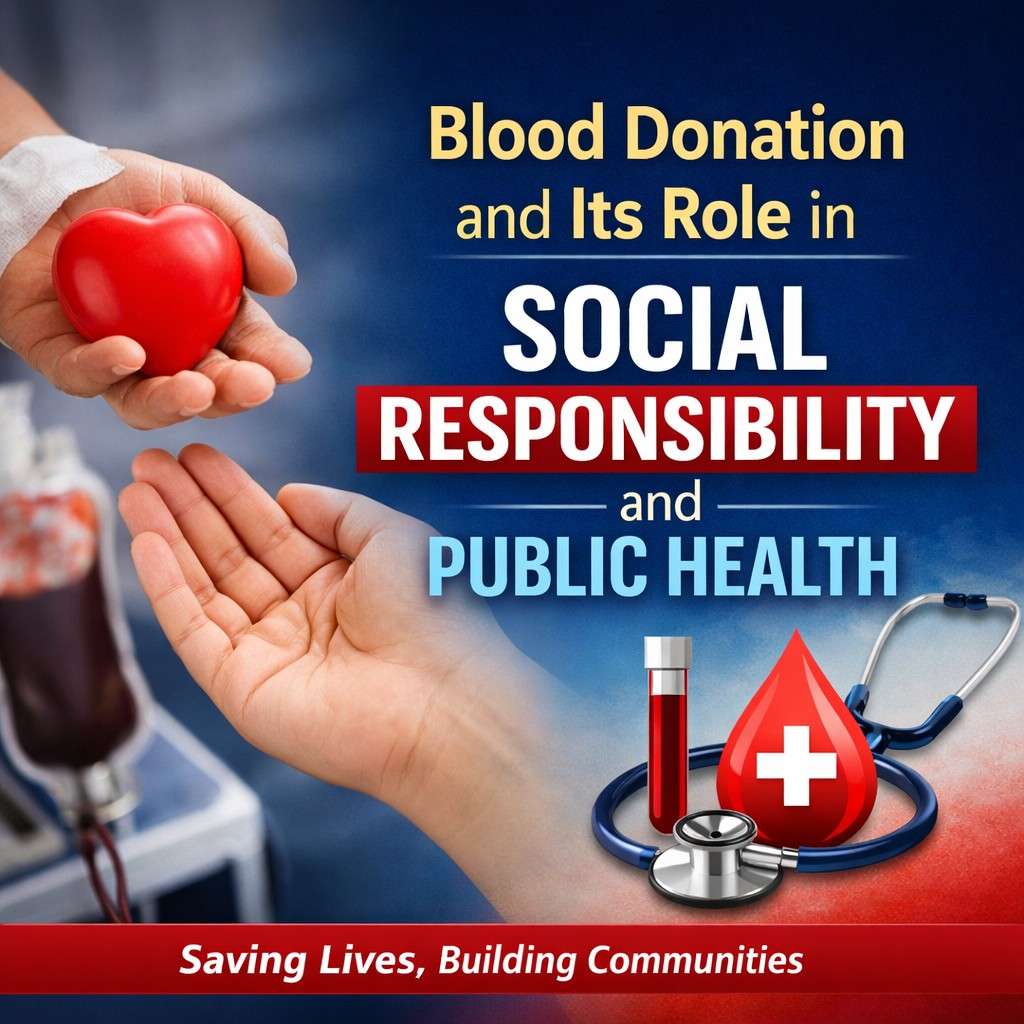
Blood donation is often seen as a medical act—something done in hospitals, blood banks, or during emergencies. But beyond the needles, forms, and medical procedures lies a deeper truth: blood donation is a powerful expression of social responsibility. It represents a silent relationship between individuals and society, one that saves lives every single day.
Understanding Social Responsibility in Healthcare
Social responsibility means recognizing that our actions affect others and choosing to act in ways that benefit the community. In healthcare, this responsibility becomes even more critical. Accidents, surgeries, childbirth complications, cancer treatments, and chronic illnesses constantly create a demand for blood. Unfortunately, blood cannot be manufactured—it can only come from willing donors.
When an individual donates blood, they are not just helping one patient; they are supporting an entire healthcare system. This single act ensures hospitals remain prepared for emergencies and gives doctors the resources they need to save lives.
Blood Donation: A Shared Duty, Not a Favor
Many people believe blood donation is something to be done “when needed.” In reality, regular blood donation is a collective duty. Society depends on a continuous supply of safe blood, and this supply can only exist when healthy individuals step forward voluntarily.
By donating blood, people fulfill a civic responsibility—just like following traffic rules or voting. It is a contribution that expects nothing in return but delivers immeasurable value. A single unit of blood can save up to three lives, making one donor a lifeline for multiple families.
The Human Connection Behind Every Donation
Blood donation creates a unique relationship between donor and recipient—often without names, faces, or meetings. A donor may never know whose life they saved, but somewhere a child recovers, a mother survives childbirth, or an accident victim gets a second chance.
This anonymous connection strengthens the moral fabric of society. It reminds us that humanity thrives not through recognition, but through compassion. When individuals act responsibly for the greater good, communities become stronger and more resilient.
Why Society Needs More Responsible Donors
Despite medical advancements, blood shortages remain common, especially during festivals, natural disasters, or health crises. Fear, myths, and lack of awareness prevent many eligible people from donating.
Social responsibility calls for breaking these barriers. Educated, healthy individuals—especially youth and working professionals—play a vital role in maintaining blood availability. When donation becomes a habit rather than a reaction to emergencies, lives are saved proactively instead of desperately.
Technology and Community Responsibility
Modern technology has made blood donation more accessible and organized. Blood donation apps, digital donor communities, and real-time alerts help bridge the gap between donors and patients. These platforms strengthen the relationship between social responsibility and action by making it easier for people to respond when help is needed.
However, technology alone cannot solve the problem. It requires people who care, who understand that donating blood is not just a personal choice, but a societal obligation.
A Simple Act with a Powerful Impact
Blood donation does not require wealth, status, or special skills. It requires only willingness and awareness. In just 15–20 minutes, a donor can make a life-changing difference.
Choosing to donate blood is choosing to stand with society in its most vulnerable moments. It is a reminder that progress is not only measured by innovation, but by empathy.
Conclusion
Blood donation and social responsibility are deeply connected. One reflects the values of the other. When individuals take responsibility for the well-being of others, lives are saved, families are protected, and communities grow stronger.
In a world often divided by differences, blood donation proves a simple truth: humanity flows the same in all of us. And by sharing it, we fulfill one of the most meaningful responsibilities we have to society.
Leave a Reply