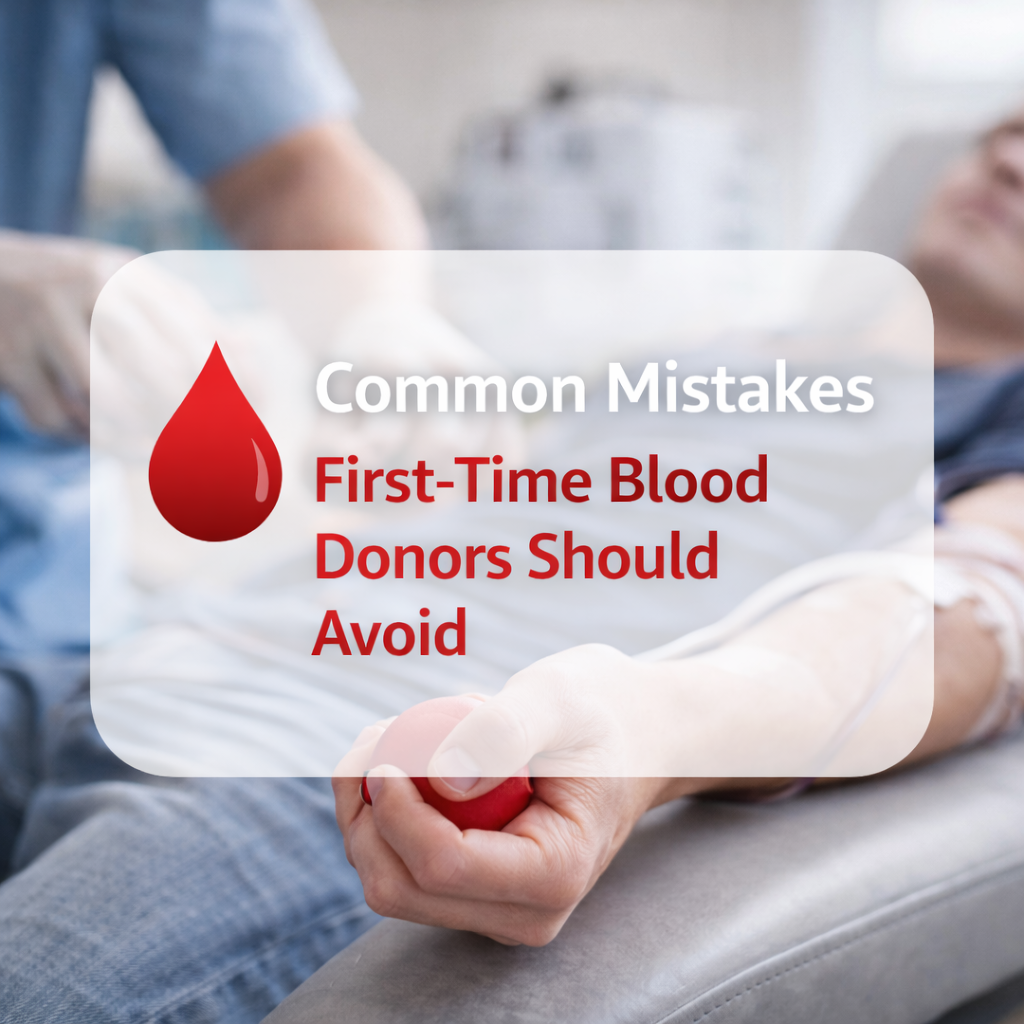
Donating blood for the first time is a generous and life-saving decision. While the process is safe and simple, many first-time donors unknowingly make small mistakes that can cause discomfort, anxiety, or even prevent them from donating successfully. Being informed beforehand helps ensure a smooth experience and encourages long-term donation habits.
Here are some of the most common mistakes first-time blood donors should avoid—and how to prepare better.
1. Donating on an Empty Stomach
One of the biggest mistakes first-time donors make is skipping meals before donation. Donating blood on an empty stomach can lead to dizziness, weakness, nausea, or fainting.
What to do instead:
Eat a light, balanced meal 2–3 hours before donating. Include fruits, whole grains, and iron-rich foods like leafy vegetables, lentils, or eggs. Avoid heavy, oily, or junk food just before donation.
2. Not Drinking Enough Fluids
Many donors underestimate the importance of hydration. Dehydration can make veins harder to locate and increase the chances of feeling lightheaded after donation.
What to do instead:
Drink plenty of water before and after donating blood. Staying hydrated helps maintain healthy blood pressure and supports quicker recovery.
3. Ignoring Eligibility Requirements
Some first-time donors arrive without checking basic eligibility criteria such as age, weight, recent illness, travel history, or medication use. This can result in last-minute deferral, which may feel discouraging.
What to do instead:
Review eligibility guidelines in advance and be honest during the screening process. These rules exist to protect both the donor and the recipient.
4. Letting Fear Take Over
Fear of needles or anxiety about the process is common among first-time donors. However, excessive nervousness can make the experience uncomfortable.
What to do instead:
Relax, take deep breaths, and communicate openly with the medical staff. The donation process usually takes only a few minutes and is handled by trained professionals.
5. Wearing Inappropriate Clothing
Tight sleeves or uncomfortable clothing can make the donation process inconvenient and uncomfortable.
What to do instead:
Wear loose, comfortable clothing with sleeves that can be rolled up easily. Comfort helps you stay relaxed during the donation.
6. Overdoing Physical Activity After Donation
Some donors resume heavy exercise or physically demanding work immediately after donating, which can lead to fatigue, dizziness, or weakness.
What to do instead:
Rest for a few hours after donation. Avoid strenuous exercise, lifting heavy objects, or long outdoor activities on the same day.
7. Skipping Post-Donation Care
Ignoring post-donation instructions—such as skipping snacks or hydration—is another common mistake.
What to do instead:
Have a snack, drink fluids, and stay seated for a few minutes after donation. If you feel dizzy or unwell, inform the staff immediately.
8. Believing One Donation Is Enough
While one donation can save lives, blood is needed every day. Many first-time donors don’t return simply because they don’t realize the ongoing need.
What to do instead:
If you’re healthy and eligible, consider making blood donation a regular habit. Consistent donors play a crucial role in maintaining a stable blood supply.
Conclusion
First-time blood donation is a meaningful step toward helping others in critical need. By avoiding these common mistakes and preparing properly, donors can ensure a safe, comfortable experience and feel confident about donating again.
Blood donation is not just a one-time act—it’s a responsibility that saves lives, strengthens communities, and reflects the best of humanity. 🩸
Leave a Reply