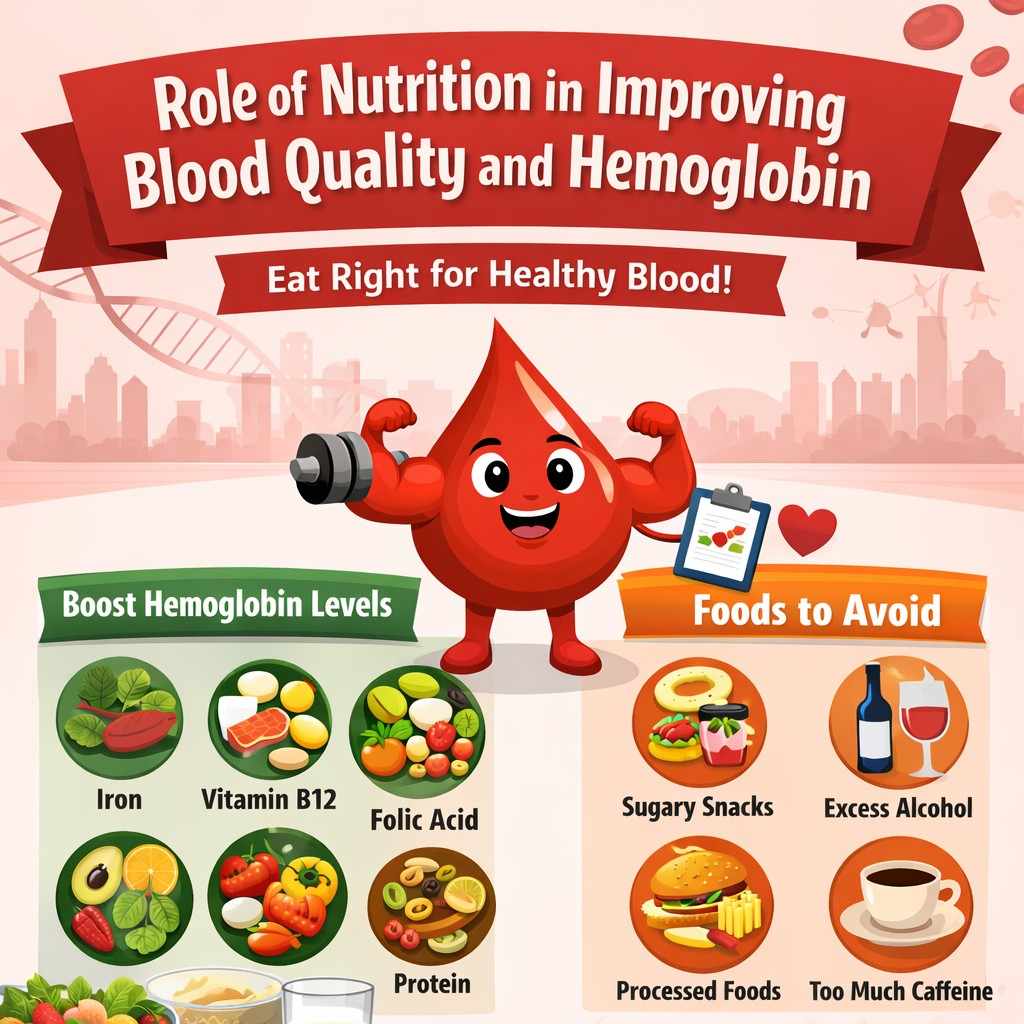
Blood plays a vital role in keeping the body healthy by transporting oxygen, nutrients, hormones, and waste products. One of the most important components of blood is hemoglobin, a protein found in red blood cells that carries oxygen from the lungs to the rest of the body. Maintaining good blood quality and healthy hemoglobin levels largely depends on proper nutrition. What we eat directly influences how efficiently our blood functions and how well our body stays energized and disease-free.
Understanding Blood Quality and Hemoglobin
Blood quality refers to the overall health and efficiency of blood components, including red blood cells, white blood cells, platelets, and plasma. Hemoglobin levels are a key indicator of blood health. Low hemoglobin can lead to conditions like anemia, causing fatigue, weakness, dizziness, and reduced immunity.
Nutrition plays a crucial role in the production of red blood cells and hemoglobin. Without the right nutrients, the body cannot produce enough healthy blood cells, leading to poor oxygen delivery and overall health issues.
Key Nutrients That Improve Blood Quality
1. Iron – The Building Block of Hemoglobin
Iron is the most essential nutrient for hemoglobin production. It helps form hemoglobin molecules that bind oxygen. Iron deficiency is one of the leading causes of low hemoglobin levels worldwide.
Iron-rich foods include:
-
Spinach and other leafy greens
-
Lentils, beans, and chickpeas
-
Red meat and liver
-
Dates, raisins, and jaggery
-
Fortified cereals
Consuming vitamin C along with iron-rich foods helps improve iron absorption.
2. Vitamin B12 – Supporting Red Blood Cell Formation
Vitamin B12 is essential for the formation and maturation of red blood cells. A deficiency can result in enlarged, unhealthy red blood cells and reduced oxygen delivery.
Sources of Vitamin B12:
-
Milk, curd, and cheese
-
Eggs
-
Fish and meat
-
Fortified plant-based foods
Vegetarians and vegans are more prone to B12 deficiency and may need supplementation under medical guidance.
3. Folic Acid (Vitamin B9) – Promoting Healthy Blood Cells
Folic acid supports DNA synthesis and helps produce healthy red blood cells. Low folate levels can cause anemia and fatigue.
Folate-rich foods include:
-
Green leafy vegetables
-
Citrus fruits
-
Avocados
-
Peanuts and legumes
-
Whole grains
4. Vitamin C – Enhancing Iron Absorption
Vitamin C does not directly increase hemoglobin but significantly improves the body’s ability to absorb iron from plant-based foods.
Good sources of Vitamin C:
-
Oranges and lemons
-
Guava
-
Bell peppers
-
Strawberries
-
Tomatoes
5. Protein – Essential for Blood Cell Production
Proteins are required to build red blood cells and plasma proteins. A protein-deficient diet can negatively affect blood quality.
Protein-rich foods include:
-
Eggs
-
Dairy products
-
Pulses and legumes
-
Nuts and seeds
-
Lean meat and fish
Foods That May Negatively Affect Blood Quality
Certain foods and habits can interfere with nutrient absorption or blood health if consumed excessively:
-
Tea and coffee reduce iron absorption when consumed with meals
-
Highly processed foods lack essential nutrients
-
Excess alcohol can interfere with red blood cell production
-
High sugar intake can impact overall blood health
Moderation and balanced eating are key to maintaining healthy blood quality.
Nutrition Tips to Maintain Healthy Hemoglobin Levels
-
Eat a balanced diet rich in iron, vitamins, and protein
-
Combine iron-rich foods with vitamin C sources
-
Stay well-hydrated to maintain blood volume
-
Avoid skipping meals
-
Get regular blood tests to monitor hemoglobin levels
Conclusion
Nutrition has a direct and powerful impact on blood quality and hemoglobin levels. A diet rich in iron, vitamins, protein, and minerals supports healthy red blood cell production and ensures efficient oxygen transport throughout the body. By making mindful food choices and maintaining a balanced diet, individuals can significantly improve their blood health, boost energy levels, and reduce the risk of anemia.
Healthy blood begins on your plate—and small nutritional changes can make a big difference in overall well-being.
Leave a Reply