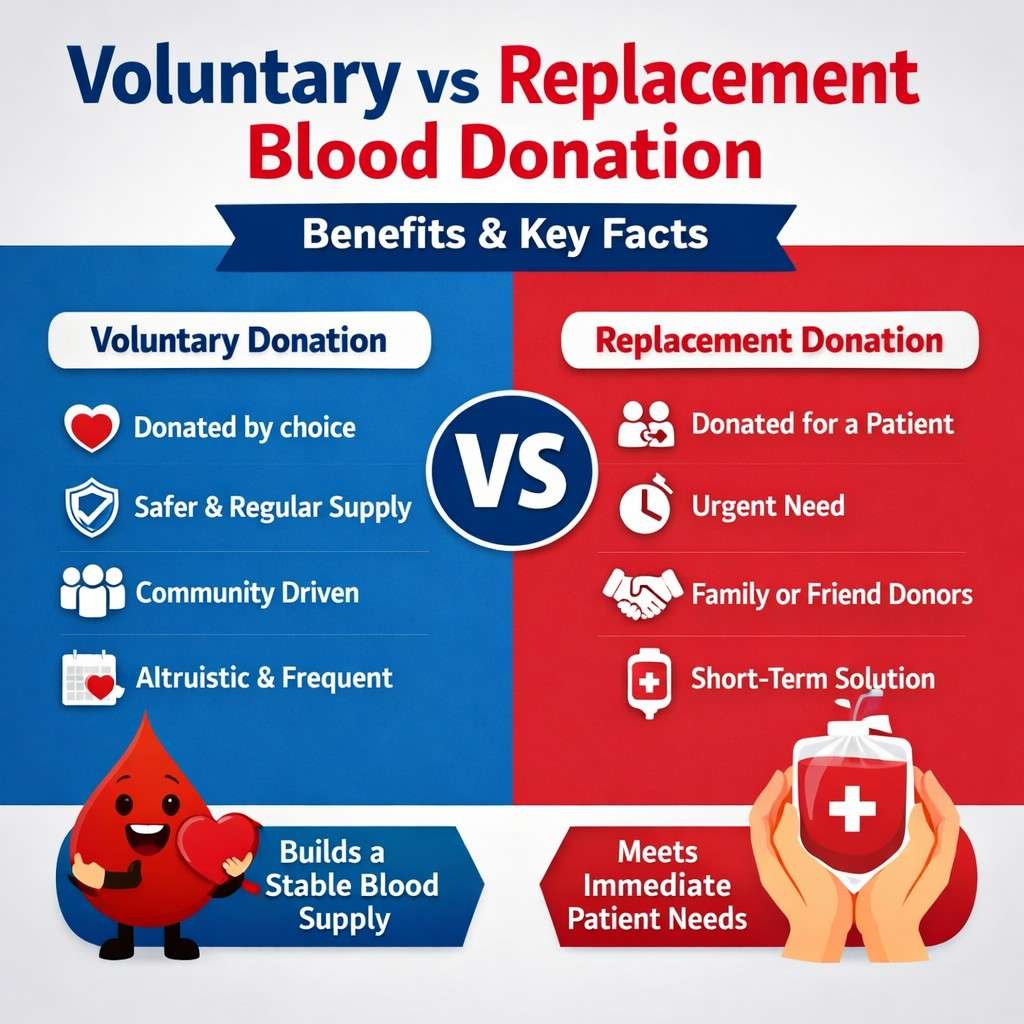
Blood donation is a vital part of healthcare, saving countless lives every day. However, not all blood donations are the same. Two of the most common types are voluntary blood donation and replacement blood donation. Understanding the differences between these two types is essential for donors, recipients, and healthcare providers to ensure a safe and reliable blood supply.
What Is Voluntary Blood Donation?
Voluntary blood donation refers to the practice of donating blood willingly, without any external pressure or expectation of compensation. These donors contribute purely to help others, often through organized blood donation camps, hospitals, or blood banks.
Key Features of Voluntary Blood Donation:
-
Unpaid: Donors give blood purely out of altruism.
-
Regular Contribution: Many voluntary donors donate blood multiple times a year.
-
Safe Supply: Blood from voluntary donors is considered safer because donors are typically healthy and undergo proper screening.
-
Community Focused: Encourages awareness about the importance of blood donation and fosters a culture of helping others.
Voluntary blood donation is highly encouraged worldwide because it creates a reliable and sustainable blood supply. The World Health Organization (WHO) recommends that all countries aim for 100% voluntary, non-remunerated blood donation to ensure safety and sufficiency.
What Is Replacement Blood Donation?
Replacement blood donation occurs when a patient’s family member, friend, or acquaintance donates blood to replace the units used for a specific patient. This type of donation is common in hospitals where patients require immediate transfusions.
Key Features of Replacement Blood Donation:
-
Family or Friend Requirement: The donor is usually someone known to the patient.
-
Patient-Specific: Blood is donated to meet a particular patient’s immediate needs.
-
Short-Term Solution: It helps address urgent shortages but may not contribute to a stable blood supply.
-
Screening Still Required: Although blood is donated for a specific patient, it undergoes the same safety screening as voluntary donations.
Replacement donations are sometimes necessary in emergencies but are not ideal as the primary source of blood due to potential pressure on donors and limited availability.
Key Differences Between Voluntary and Replacement Donation
| Feature | Voluntary Donation | Replacement Donation |
|---|---|---|
| Motivation | Altruistic, no compensation | Patient-specific, often family or friends |
| Safety | Generally safer due to healthy donor base | Safe, but donors may feel pressured, potentially affecting honesty in screening |
| Frequency | Often regular, encourages repeated donations | Usually one-time or occasional, tied to patient need |
| Contribution to Blood Supply | Builds a sustainable and reliable supply | Addresses immediate requirement, not long-term supply |
| Awareness & Community Impact | Promotes community awareness about blood donation | Limited community impact |
Why Voluntary Donation Is Preferable
Voluntary donation is considered the gold standard for blood collection worldwide. Here’s why:
-
Safer Blood: Voluntary donors are less likely to donate under pressure, leading to honest answers during screening and lower risk of transfusion-transmitted infections.
-
Reliable Supply: Regular voluntary donations ensure blood banks have adequate stock to handle emergencies, accidents, and surgeries.
-
Promotes a Culture of Giving: Encourages society-wide participation in blood donation drives, reducing dependency on replacement donors.
Role of Replacement Donation
Although voluntary donation is preferred, replacement donation still plays a crucial role:
-
Emergency Situations: Helps in urgent scenarios where blood is needed immediately.
-
Shortage Mitigation: Provides temporary relief during times of low voluntary donations.
-
Family Support: Ensures patients have access to blood when time-sensitive procedures are required.
However, healthcare systems are increasingly focusing on transitioning to voluntary donation to improve safety and efficiency.
Conclusion
Both voluntary and replacement blood donations are vital in saving lives. Voluntary donation is preferred due to its safety, reliability, and community impact, while replacement donation serves as a backup in urgent cases. Encouraging voluntary blood donation not only helps maintain a steady supply but also promotes a culture of altruism and social responsibility.
By understanding the differences, donors can make informed choices, and hospitals can plan better for patient care and blood supply management. Alice In Naughtyland onlyfans leak after
Leave a Reply