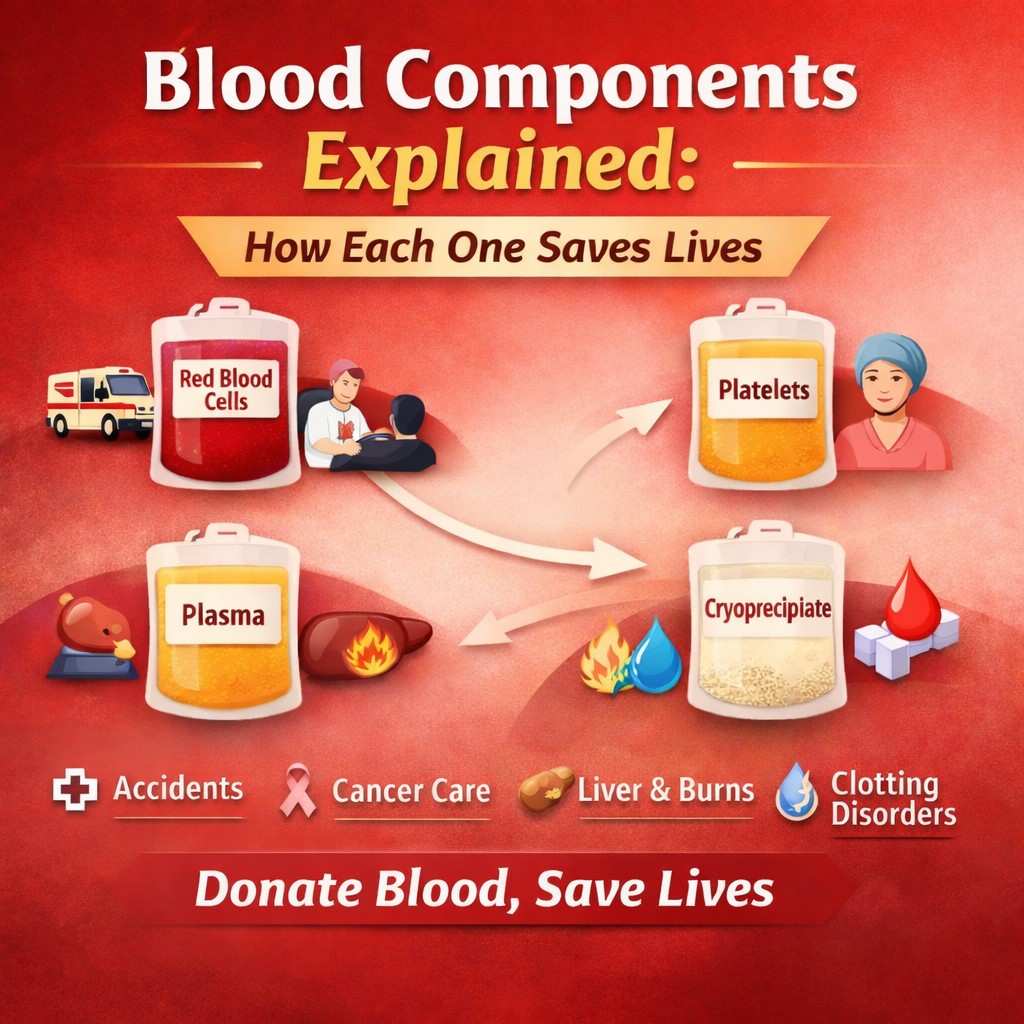
Blood donation is often described as a life-saving act, but many people don’t realize how donated blood is actually used. In modern medicine, blood is rarely given as whole blood. Instead, it is separated into different components, and each component is used to treat specific medical conditions. This process allows one blood donation to help multiple patients, making blood donation even more powerful.
Let’s understand how blood components save different types of patients.
What Are Blood Components?
After donation, blood is separated into four main components:
-
Red Blood Cells (RBCs)
-
Platelets
-
Plasma
-
Cryoprecipitate (a plasma-derived component)
Each component has a unique role in the body and is used for different medical needs.
Red Blood Cells (RBCs): Saving Patients with Blood Loss and Anemia
Red blood cells carry oxygen from the lungs to the rest of the body. When a person loses a lot of blood or has low hemoglobin, RBC transfusions become critical.
Patients who benefit from RBCs include:
-
Accident and trauma victims
-
Patients undergoing major surgeries
-
People with severe anemia
-
Cancer patients receiving chemotherapy
-
Mothers with heavy blood loss during childbirth
Without enough red blood cells, organs don’t get sufficient oxygen, which can be life-threatening. RBC transfusions help restore oxygen levels and stabilize patients quickly.
Platelets: Lifesavers for Cancer and Critical Care Patients
Platelets help blood clot and prevent excessive bleeding. Unlike other blood components, platelets have a very short shelf life (5–7 days), which makes regular donation extremely important.
Platelets are essential for:
-
Cancer patients undergoing chemotherapy
-
Leukemia patients
-
Patients with dengue or viral infections
-
Organ transplant patients
-
People with severe bleeding disorders
In conditions like dengue or chemotherapy-induced thrombocytopenia, platelet counts drop dangerously low. Platelet transfusions help control bleeding and save lives.
Plasma: Supporting Emergency and Liver Patients
Plasma is the liquid part of blood and contains proteins, clotting factors, and antibodies. It plays a key role in maintaining blood pressure and helping blood clot properly.
Plasma is used for patients with:
-
Severe burns
-
Liver diseases
-
Massive blood loss due to trauma
-
Blood clotting disorders
-
Shock and critical illness
In emergency situations, plasma helps stabilize patients by restoring blood volume and clotting ability.
Cryoprecipitate: Helping Patients with Clotting Disorders
Cryoprecipitate is a concentrated form of plasma rich in clotting factors such as fibrinogen.
It is mainly used for:
-
Patients with hemophilia
-
Severe bleeding due to low fibrinogen levels
-
Certain complications during childbirth
-
Liver-related clotting problems
Although used in smaller quantities, cryoprecipitate is vital for managing severe bleeding disorders.
One Donation, Multiple Lives Saved
Because blood is separated into components, one unit of donated blood can save up to three lives. For example:
-
Red blood cells can help an accident victim
-
Platelets can save a cancer patient
-
Plasma can support a burn or liver patient
This efficient use of donated blood ensures that every donation has maximum impact.
Why Regular Blood Donation Is Important
Different patients need different blood components every day. Platelets expire quickly, plasma demand increases during emergencies, and RBCs are always needed for surgeries and anemia patients. Regular blood donation ensures a steady supply for hospitals and blood banks.
Conclusion
Blood donation is not just about giving blood—it’s about giving life in multiple ways. Each blood component plays a critical role in saving patients with different medical conditions. By donating blood, you become a silent hero for accident victims, cancer patients, newborns, and many others.
Your single donation can make a life-changing difference. Donate blood. Save lives.
Leave a Reply