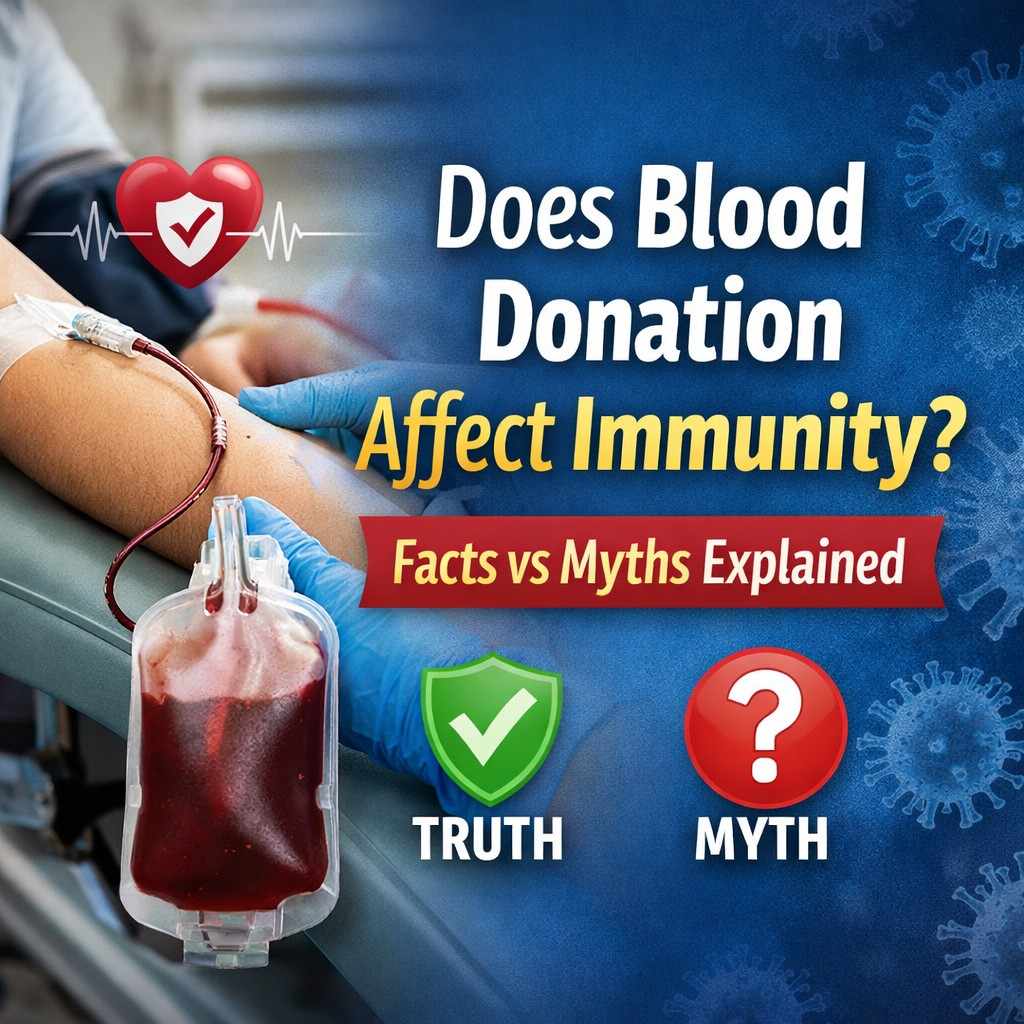
Blood donation is one of the simplest ways to save lives, yet many people hesitate because of common myths related to immunity and health. A frequent concern is whether donating blood weakens the immune system. Let’s separate facts from fiction and understand how blood donation truly affects immunity.
Myth 1: Blood Donation Weakens Your Immune System
Truth: Blood donation does not weaken your immune system.
When you donate blood, your body quickly begins to replace the lost volume. Plasma is replenished within 24–48 hours, and red blood cells are restored within a few weeks. Your immune system remains active and functional throughout this process.
Healthy donors are carefully screened before donation to ensure they are physically fit. This screening protects both the donor and the recipient. For healthy individuals, blood donation does not compromise immune strength.
Myth 2: You Become More Prone to Infections After Donating Blood
Truth: There is no scientific evidence that blood donation increases the risk of infections.
Your body continues to produce white blood cells that fight infections even after donation. The sterile and hygienic process of blood collection ensures there is no risk of contamination during donation.
As long as donors follow post-donation instructions such as staying hydrated, eating nutritious food, and resting briefly, their immune defenses remain stable.
Myth 3: Frequent Blood Donation Can Harm Your Health
Truth: Regular blood donation is safe when done within recommended intervals.
Most health organizations allow:
-
Whole blood donation every 3 months for men
-
Every 4 months for women (depending on health guidelines)
These intervals give the body enough time to recover and regenerate blood components. Many regular donors report feeling healthy and energetic when they maintain a balanced diet and hydration.
Myth 4: Blood Donation Causes Long-Term Weakness
Truth: Temporary tiredness is normal, but long-term weakness is not.
Some donors may feel light-headed or tired for a few hours after donation. This is temporary and usually caused by mild dehydration or low blood volume. Proper hydration and rest help the body recover quickly.
Long-term weakness is extremely rare and usually linked to poor nutrition or ignoring recovery advice—not the act of donation itself.
How Blood Donation Can Positively Impact Health
While blood donation is mainly about helping others, it also offers health benefits:
1. Stimulates Blood Cell Production
After donation, the body increases the production of new red blood cells. This process helps maintain healthy circulation and oxygen delivery.
2. Supports Heart Health
Some studies suggest that regular blood donation may help maintain balanced iron levels, which can support cardiovascular health.
3. Encourages Health Monitoring
Before donating, donors undergo basic health checks like hemoglobin levels, blood pressure, and pulse rate. This can help identify potential health concerns early.
Does Blood Donation Improve Immunity?
Blood donation does not directly boost immunity like a vaccine does, but it does not reduce immune strength either. A healthy lifestyle combined with regular donation can support overall wellness.
To maintain strong immunity after donation:
-
Drink plenty of fluids
-
Eat iron-rich foods (spinach, beans, dates, red meat)
-
Include vitamin C for better iron absorption
-
Get enough sleep
-
Avoid heavy exercise for 24 hours
Who Should Avoid Donating Blood Temporarily?
Some people should postpone donation to protect their health, including:
-
Those with fever or active infections
-
People recovering from surgery
-
Individuals with low hemoglobin levels
-
Pregnant women
-
Recently vaccinated individuals (depending on vaccine type)
These precautions ensure donor safety and blood quality.
Final Thoughts
Blood donation is safe, well-regulated, and does not weaken immunity. The myths surrounding immune health often prevent willing donors from taking action. In reality, healthy individuals can donate blood without fear and continue living active, energetic lives.
By donating blood, you are not only saving lives but also contributing to a healthier community. Understanding the truth helps break fear barriers and encourages more people to step forward as regular donors.
Leave a Reply