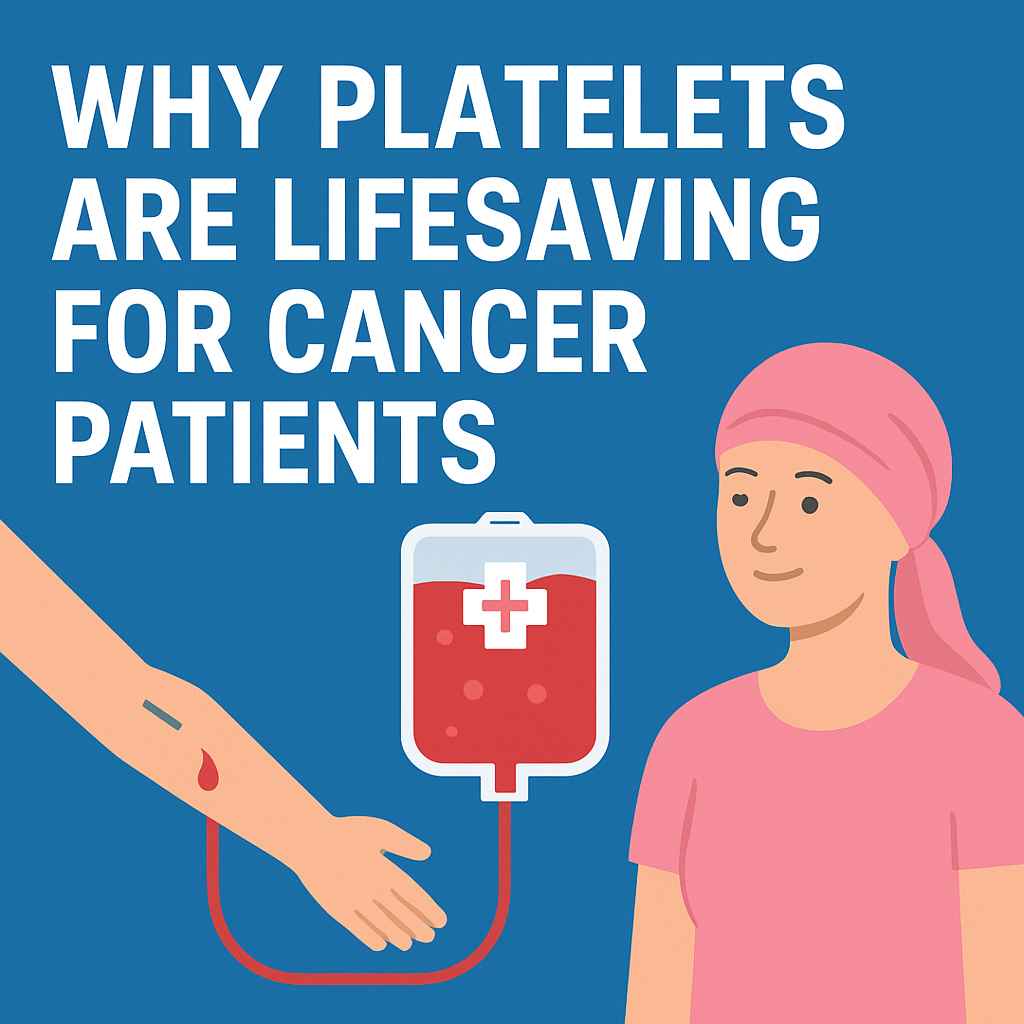
Platelet donation plays a silent yet life-saving role in cancer treatment. While most people know about blood donation, very few understand the importance of platelet donation—especially for cancer patients undergoing chemotherapy, radiation therapy, or bone marrow transplants. In reality, platelets are among the most urgently needed components in hospitals, and demand is consistently higher than supply.
This blog explains why platelet donation is important for cancer patients, how it helps, who can donate, and why regular platelet donors are crucial for saving lives.
What Are Platelets and Why Are They Vital?
Platelets are tiny blood cells responsible for helping the body form clots and stop bleeding. Without enough platelets, even a minor injury can cause serious bleeding. This is why cancer patients, particularly those with blood cancers like leukemia or lymphoma, often rely on regular platelet transfusions.
Low platelet counts—called thrombocytopenia—are extremely common during cancer treatment. Chemotherapy destroys not only cancer cells but also healthy blood-forming cells in the bone marrow. As a result, platelet levels drop to dangerously low levels, putting patients at risk of:
-
Internal bleeding
-
Prolonged bleeding from minor cuts
-
Nosebleeds and gum bleeding
-
Excessive bruising
-
Life-threatening complications
For many patients, platelet transfusions are not optional—they are essential for survival.
Why Platelet Donation Is Crucial for Cancer Patients
1. Cancer Treatments Often Reduce Platelet Counts
Most cancer therapies damage the bone marrow, which produces new blood cells. Without transfusions, platelet counts can fall so low that doctors must delay or stop treatment. Regular platelet donations help ensure patients can continue life-saving therapy on schedule.
2. Platelets Have a Very Short Shelf Life
Unlike whole blood, which lasts up to 35–42 days, platelets can be stored for only 5–7 days. This short shelf life means hospitals constantly need fresh platelet donations to meet daily demand. Even a temporary drop in donations can lead to shortages.
3. Blood Cancer Patients Need Platelets Frequently
Patients with leukemia, lymphoma, myeloma, or those undergoing bone marrow and stem cell transplants often need multiple platelet transfusions every week. One patient may require dozens of donations throughout their treatment journey.
4. Platelet Donation Helps Prevent Life-Threatening Bleeding
Cancer patients are highly vulnerable to internal and external bleeding. Platelet transfusions help stabilize their condition, reduce complications, and support safer recovery after treatments and surgeries.
5. One Donation Can Help Multiple Patients
Platelet donation is incredibly efficient. A single apheresis donation—collected using a special machine—can help three or more cancer patients, making every donor’s contribution extremely impactful.
Who Can Donate Platelets?
Eligibility for platelet donation is similar to blood donation but with a few differences. Most donors must:
-
Be between 18 and 60 years old
-
Weigh at least 50 kg
-
Have good vein health
-
Not have taken aspirin/NSAIDs in the past 48 hours
-
Meet standard blood donation health criteria
Because platelets regenerate quickly, donors can donate every 7 days (up to 24 times a year), allowing them to help more patients frequently.
Platelet Donation Process: Quick and Safe
Platelet donation is performed through a process called apheresis, where a machine separates platelets from your blood and returns the rest to your body. The procedure typically takes 60–90 minutes, is completely safe, and causes no long-term side effects.
Most donors return to their normal routine the same day.
Why Platelet Donors Are Real Lifesavers
Cancer patients depend on platelet donors daily. Without platelet transfusions, many treatments become impossible, and survival rates drop significantly. Every platelet donation helps a patient:
-
Continue treatment
-
Prevent bleeding complications
-
Recover faster
-
Stay hopeful
Becoming a platelet donor is one of the most meaningful ways to support cancer patients.
Final Thoughts
Platelet donation is a life-saving act that directly supports cancer patients in their most vulnerable moments. With increasing cancer cases and short platelet shelf life, the need for regular donors is greater than ever. If you are eligible, consider becoming a platelet donor—you may give someone a chance to fight, heal, and survive.
Leave a Reply