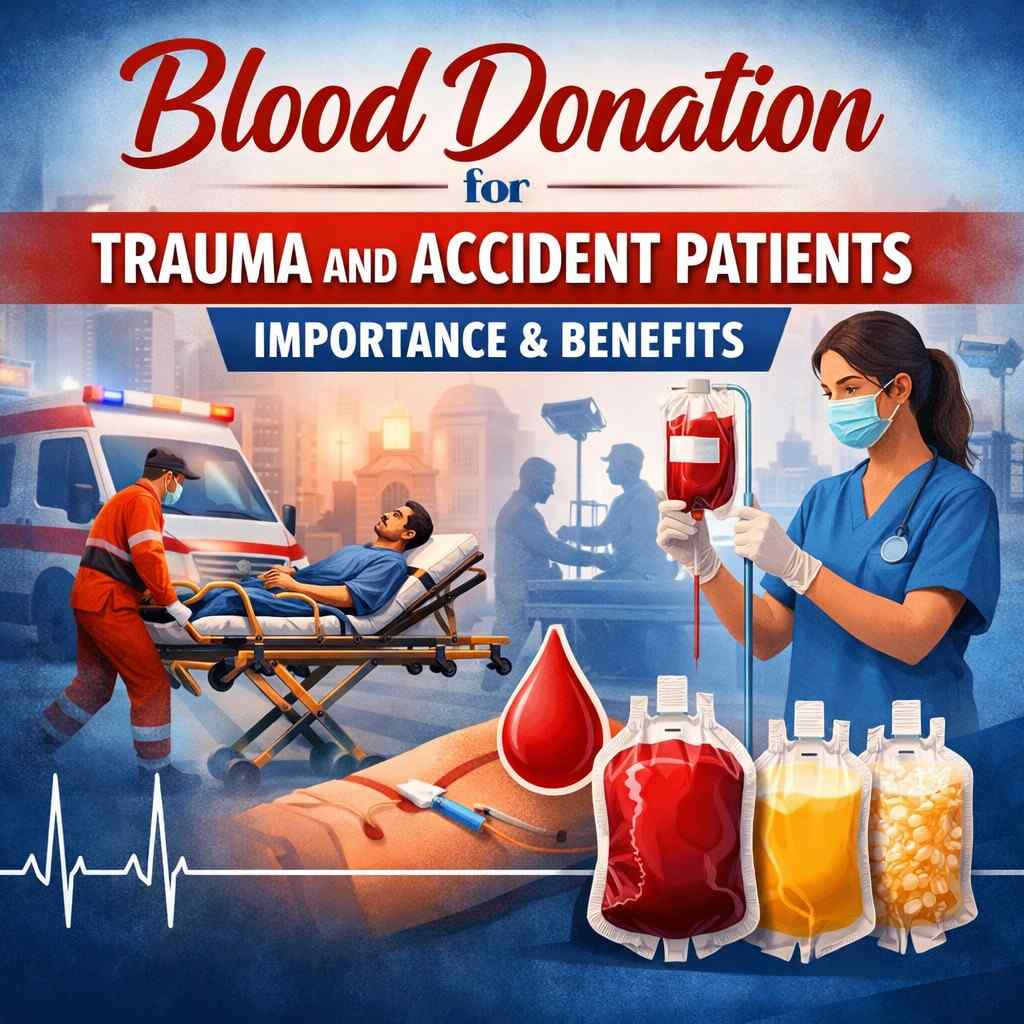
Road accidents are one of the leading causes of emergency hospital admissions worldwide. Every day, thousands of accident victims require immediate blood transfusions to survive severe injuries. In such critical moments, blood donation becomes not just helpful — it becomes lifesaving. A single unit of donated blood can mean the difference between life and death for a trauma patient.
Why Accident Victims Need Blood Urgently
Accident victims often suffer from heavy blood loss due to internal injuries, fractures, and open wounds. This sudden loss of blood can lead to shock, organ failure, and even death if not treated quickly. Hospitals must act fast, and blood transfusions are one of the first emergency treatments given to stabilize patients.
Unlike many medicines, blood cannot be manufactured artificially. It must come from healthy donors. This is why blood banks constantly depend on voluntary donors to maintain a ready supply for emergencies.
The Golden Hour: Timing Is Critical
Medical professionals refer to the first hour after a severe accident as the “Golden Hour.” During this time, rapid treatment significantly increases the patient’s chance of survival. Immediate access to blood allows doctors to restore circulation, maintain oxygen supply to vital organs, and prevent complications.
When blood stocks are low, hospitals may face dangerous delays. Regular blood donation helps ensure that blood is available exactly when it is needed most.
How One Blood Donation Helps Multiple Patients
Many people do not realize that a single blood donation can help more than one patient. Donated blood is separated into components such as red blood cells, plasma, and platelets. Each component serves a different medical purpose:
-
Red blood cells help restore oxygen supply for accident victims with major blood loss.
-
Plasma supports clotting and stabilizes blood pressure.
-
Platelets assist in stopping excessive bleeding.
This means one donor can potentially save up to three lives through a single donation.
Common Blood Types Needed for Trauma Cases
Emergency rooms often require O-negative blood because it is considered the universal donor type and can be given to patients of any blood group when there is no time to test their blood type. However, all blood groups are important, and hospitals need a balanced supply to meet ongoing demands.
By donating regularly, people of all blood types contribute to a stronger emergency healthcare system.
Benefits of Blood Donation for Donors
Blood donation not only saves lives but also offers benefits to donors. It helps stimulate the production of new blood cells, supports cardiovascular health, and provides a free mini health check including blood pressure and hemoglobin levels. More importantly, it creates a strong sense of social responsibility and personal satisfaction.
Knowing that your blood may help an accident victim recover and return to their family is a powerful motivation for many donors.
How You Can Help Save Accident Victims
Becoming a blood donor is simple and safe. Healthy adults who meet eligibility criteria can donate every few months. Participating in blood donation camps, registering with local blood banks, and encouraging friends and family to donate can create a strong donor network.
You can also support awareness campaigns and share information about blood donation on social media to inspire others to take action.
Conclusion
Accidents happen unexpectedly, but being prepared can save lives. Blood donation plays a vital role in emergency trauma care, especially for accident victims who need immediate transfusions. By donating blood regularly, you become a silent hero who gives others a second chance at life.