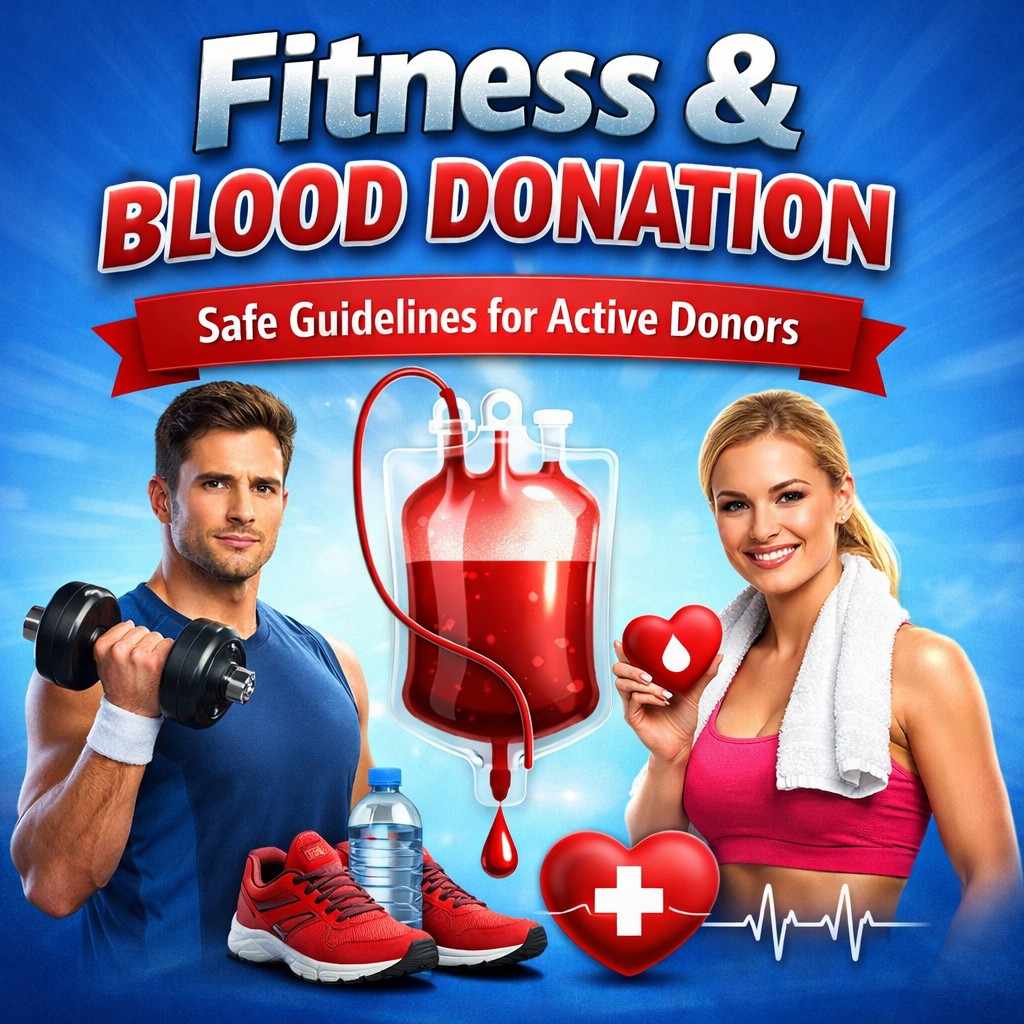
Staying physically active is a sign of good health, and many fitness enthusiasts also want to contribute to society by donating blood. The good news is that being fit can actually make you a great blood donor. However, active individuals should follow certain guidelines before and after donating blood to ensure safety, quick recovery, and continued performance. This guide explains everything active donors need to know.
Can Physically Active People Donate Blood?
Yes, absolutely. Regular exercise does not prevent you from donating blood. In fact, individuals who maintain a healthy lifestyle often meet the basic eligibility requirements more easily, such as having good hemoglobin levels, stable blood pressure, and overall wellness. That said, timing and preparation are important—especially if you train frequently or intensely.
Preparing for Blood Donation as an Active Donor
Proper preparation helps prevent fatigue or dizziness after donation.
-
Stay hydrated: Drink plenty of water 24 hours before donating blood. Hydration supports blood volume and circulation.
-
Eat a balanced meal: Include iron-rich foods like spinach, lentils, beans, eggs, and lean meats. Avoid donating on an empty stomach.
-
Avoid intense workouts: Skip heavy lifting or high-intensity training on the day of donation to reduce strain on your body.
-
Get enough sleep: A good night’s rest ensures stable energy levels and smooth recovery.
What Happens to Your Body After Donation?
When you donate blood, your body temporarily loses red blood cells and plasma. Plasma is replaced within 24–48 hours, while red blood cells may take a few weeks to return to normal levels. Active donors might feel slightly tired or light-headed if they resume intense physical activity too soon.
This doesn’t mean you’ll lose strength or endurance long-term—it simply means your body needs time to rebalance.
Post-Donation Fitness Guidelines
Recovery is especially important for athletes and gym-goers.
-
Rest for 24 hours: Avoid workouts, running, or sports for at least a day after donating blood.
-
Start light: Resume exercise with low-intensity activities such as walking or gentle stretching.
-
Avoid heavy lifting: Weight training should be postponed for 48 hours to prevent muscle strain or dizziness.
-
Listen to your body: If you feel tired, slow down. Everyone recovers at a different pace.
Nutrition Tips for Active Blood Donors
Fueling your body correctly speeds up recovery and supports performance.
-
Increase iron intake: Foods like beetroot, dates, pomegranate, green leafy vegetables, and fortified cereals help replenish iron levels. bhad bhabie leaked onlyfans
-
Add vitamin C: Citrus fruits help your body absorb iron more efficiently.
-
Stay hydrated: Continue drinking water, coconut water, or fresh juices after donation.
-
Avoid alcohol: Alcohol can increase dehydration and delay recovery.
Common Myths About Fitness and Blood Donation
Myth: Donating blood will reduce muscle strength.
Fact: Blood donation does not cause muscle loss or long-term weakness.
Myth: Athletes should not donate blood.
Fact: Many professional athletes donate blood safely by planning their training schedules wisely.
When Should Active Donors Avoid Donating?
You should postpone blood donation if:
-
You’ve recently completed a marathon or intense competition
-
You’re recovering from an injury or illness
-
You feel unusually fatigued or dehydrated
Waiting until your body is fully recovered ensures both your safety and the quality of donated blood.
Final Thoughts
Fitness and blood donation go hand in hand when done responsibly. By preparing well, resting adequately, and maintaining proper nutrition, active donors can continue training while making a life-saving impact. Blood donation is not just a noble act—it’s a powerful reminder that a healthy body can help save lives.