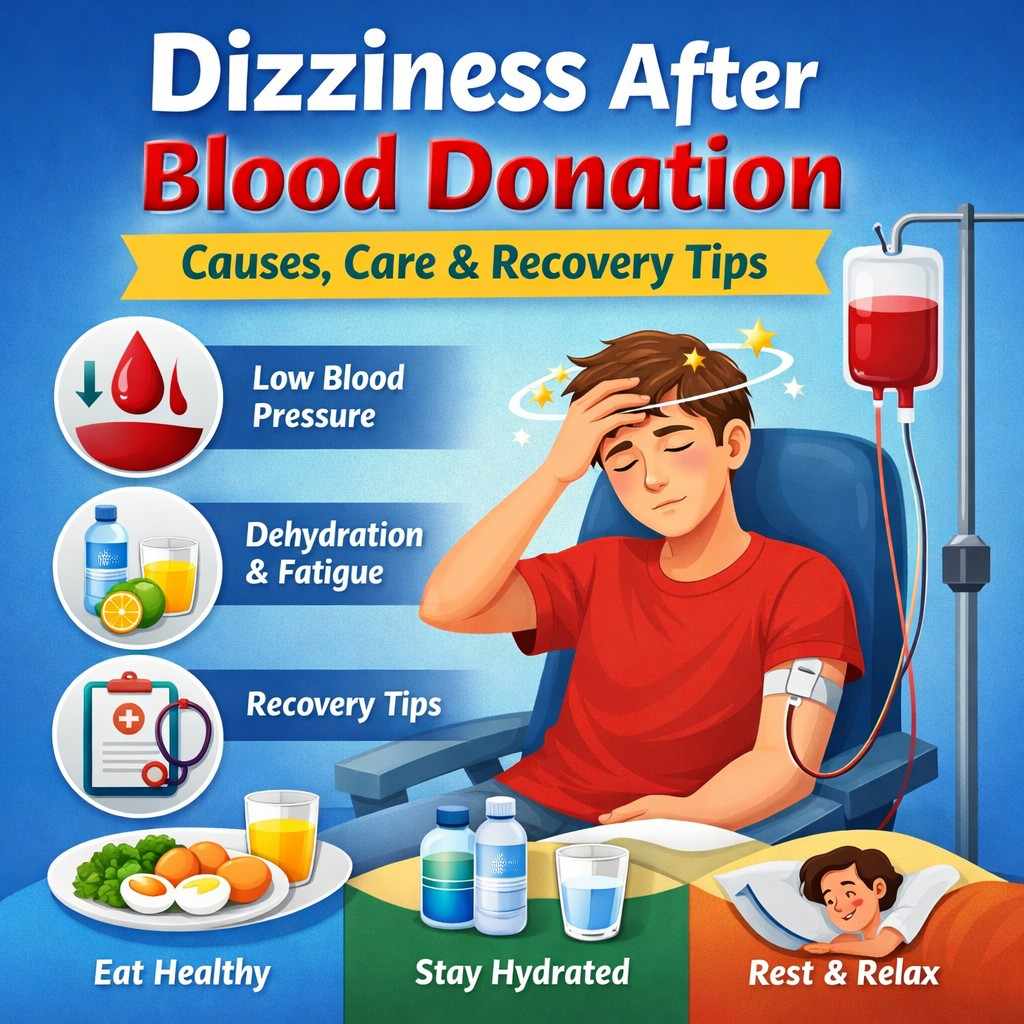
Blood donation is a noble act that helps save lives, but some donors—especially first-time donors—may experience mild dizziness or fatigue after donating blood. This reaction is usually temporary and completely normal. Understanding why it happens and knowing how to manage it can help ensure a safe and comfortable recovery after donation.
Why Dizziness or Fatigue Occurs After Blood Donation
During blood donation, approximately 350–450 ml of blood is collected. This temporary reduction in blood volume can cause a drop in blood pressure, leading to lightheadedness or fatigue. In some cases, dehydration, low blood sugar, anxiety, or standing up too quickly after donation may contribute to these symptoms. The body typically restores the lost blood volume within 24–48 hours, while red blood cells are replenished over a few weeks.
Immediate Steps to Take After Donation
Right after donating blood, it’s important to rest for a short period. Most donation centers recommend sitting or lying down for 10–15 minutes. This allows your body to adjust and helps prevent sudden drops in blood pressure. Avoid getting up too quickly, and if you feel lightheaded, inform the staff immediately so they can assist you.
Drinking fluids is essential. Water, fruit juice, or electrolyte drinks help restore lost fluids and improve circulation. Avoid alcohol for at least 24 hours, as it can increase dehydration and worsen dizziness.
Eat the Right Foods for Recovery
Eating a light, nutritious meal after donation plays a key role in reducing fatigue. Choose foods rich in iron, protein, and complex carbohydrates. Iron-rich foods such as spinach, lentils, beans, eggs, and lean meats help replenish iron levels, while fruits like oranges or lemons enhance iron absorption due to their vitamin C content.
Avoid skipping meals after donating blood. Low blood sugar can increase feelings of weakness or dizziness, especially if you donated on an empty stomach.
Take It Easy for the Rest of the Day
After donating blood, avoid heavy exercise, gym workouts, or strenuous physical activities for at least 24 hours. Intense activity can divert blood flow to muscles, increasing the risk of dizziness or fainting. Light activities such as walking or stretching are usually safe if you feel comfortable.
Also, avoid standing for long periods and be cautious when climbing stairs or driving immediately after donation. If your job involves physical labor, consider taking the rest of the day off or performing lighter tasks.
Manage Dizziness Safely
If you feel dizzy at any point after leaving the donation center, sit or lie down immediately. Elevating your legs can help improve blood flow to the brain and reduce lightheadedness. Deep, slow breathing can also help calm the nervous system and stabilize blood pressure. corina kopf leak
In case of nausea or excessive sweating, loosen tight clothing and sip water slowly. Most symptoms resolve within a few minutes when handled correctly.
Stay Hydrated and Rest Well
Hydration doesn’t stop after the donation center visit. Continue drinking fluids throughout the day and the following day. Proper sleep is equally important. A good night’s rest allows the body to recover faster and helps reduce lingering fatigue.
When to Seek Medical Help
Mild dizziness and fatigue usually disappear within a few hours. However, seek medical attention if symptoms persist beyond 24 hours, worsen, or are accompanied by fainting, chest pain, or severe weakness. These symptoms are rare but should not be ignored.
Final Thoughts
Experiencing dizziness or fatigue after blood donation is common and temporary. With proper hydration, nutrition, rest, and mindful activity, most donors recover quickly and comfortably. Preparing well before donation and following post-donation care guidelines ensures a positive experience—making it easier to donate again and continue saving lives.