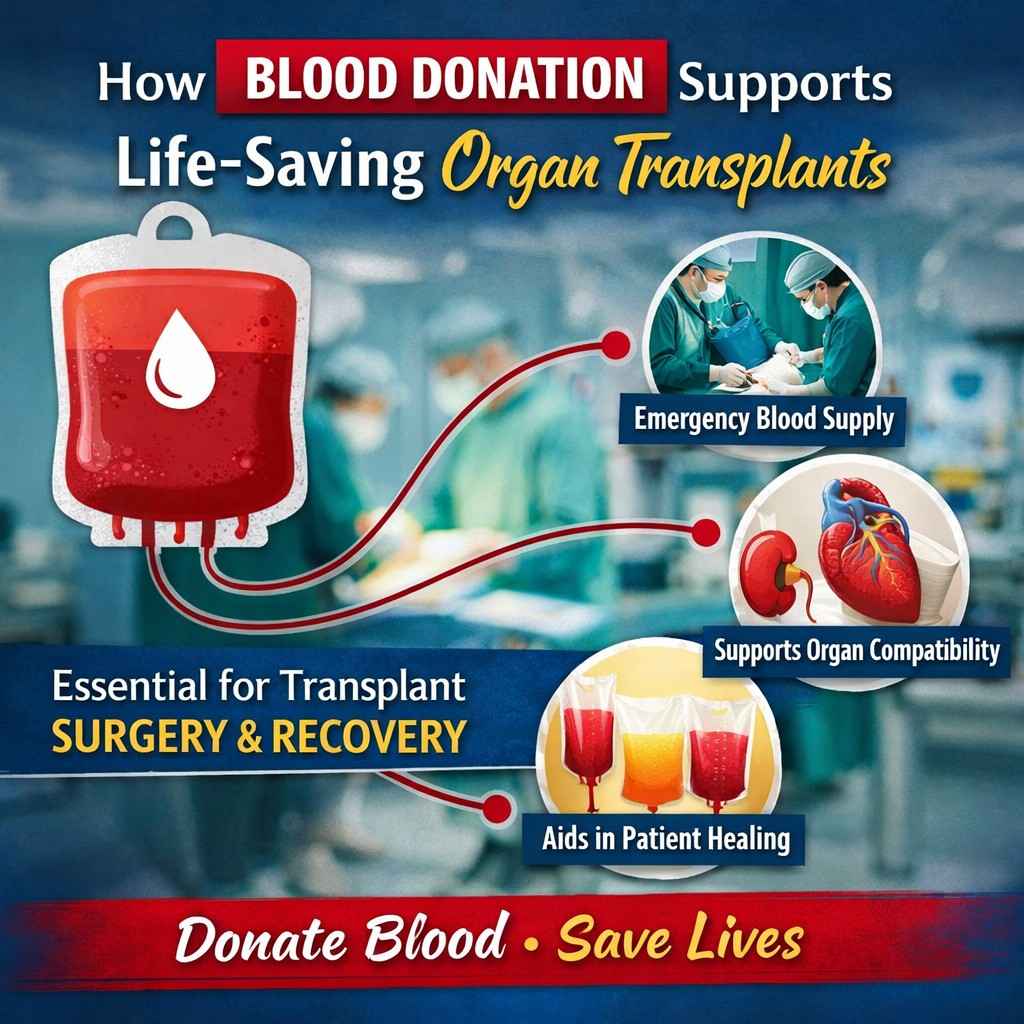
Organ transplantation is one of the most complex and life-saving medical procedures in modern healthcare. From kidney and liver transplants to heart and lung transplants, these surgeries offer a second chance at life for patients with end-stage organ failure. However, one critical factor that makes successful organ transplants possible is the availability of safe and timely blood donation.
Blood donation plays a vital role at every stage of an organ transplant procedure—from pre-surgery preparation to post-operative recovery. Without an adequate blood supply, even the most advanced transplant surgeries cannot be performed safely.
Why Blood Is Essential During Organ Transplants
Organ transplant surgeries are major and high-risk procedures that often involve significant blood loss. Patients undergoing transplants may require:
-
Red blood cells to maintain oxygen supply
-
Plasma to support clotting and fluid balance
-
Platelets to prevent excessive bleeding
In many cases, multiple units of blood and blood components are needed during a single transplant surgery. A shortage of blood can lead to delays or even cancellation of life-saving transplant procedures.
Blood Transfusion Before Transplant Surgery
Before an organ transplant, patients undergo extensive medical evaluations. Many transplant patients suffer from chronic illnesses such as liver disease, kidney failure, or heart conditions, which can cause anemia or low blood counts.
Blood transfusions before surgery help:
-
Stabilize hemoglobin levels
-
Improve oxygen delivery to vital organs
-
Prepare the patient’s body for major surgery
This preparation significantly increases the chances of a successful transplant.
Role of Blood Donation During Surgery
During transplant surgery, unexpected blood loss can occur due to the complexity of the procedure. Immediate access to compatible blood is critical to:
-
Maintain blood pressure
-
Prevent shock
-
Ensure continuous oxygen supply to tissues
For this reason, hospitals performing transplant surgeries rely heavily on blood banks that are well-stocked through regular voluntary blood donation.
Post-Transplant Recovery and Blood Support
The importance of blood donation does not end once the surgery is complete. After transplantation, patients may require additional blood transfusions due to:
-
Post-surgical bleeding
-
Low blood cell production
-
Immune suppression therapies
Blood components such as platelets and plasma are often needed to support healing and prevent complications during recovery.
Importance of Blood Compatibility in Transplants
Just like organ compatibility, blood group matching is crucial in transplant procedures. Incompatible blood transfusions can lead to severe reactions and complications. Blood banks play a key role in:
-
Providing blood that matches the patient’s blood group
-
Ensuring screened and safe blood components
-
Maintaining rare blood groups for critical cases
This highlights the importance of a diverse donor base, as rare blood groups are often required in complex transplant cases.
How Blood Donation Supports Multiple Transplant Patients
One unit of donated blood can be separated into components such as red blood cells, plasma, and platelets. This means a single blood donation can help multiple transplant patients at different stages of treatment.
Regular blood donation ensures:
-
Reduced surgery delays
-
Better transplant success rates
-
Improved patient survival outcomes
The Role of Voluntary Blood Donors
Voluntary blood donors are the backbone of transplant healthcare systems. Unlike replacement donations, voluntary donations ensure a safer, more reliable blood supply that is available when emergencies arise.
Encouraging regular voluntary blood donation helps hospitals:
-
Maintain adequate blood reserves
-
Handle emergency transplant cases
-
Save more lives through timely interventions
Conclusion
Organ transplantation is a life-saving medical achievement, but its success depends heavily on the availability of safe blood. From pre-surgical preparation to recovery, blood donation plays an indispensable role in ensuring smooth and successful transplant procedures.
By donating blood regularly, individuals contribute directly to saving the lives of organ transplant patients. Blood donation is not just an act of kindness—it is a critical support system that makes modern transplant medicine possible.