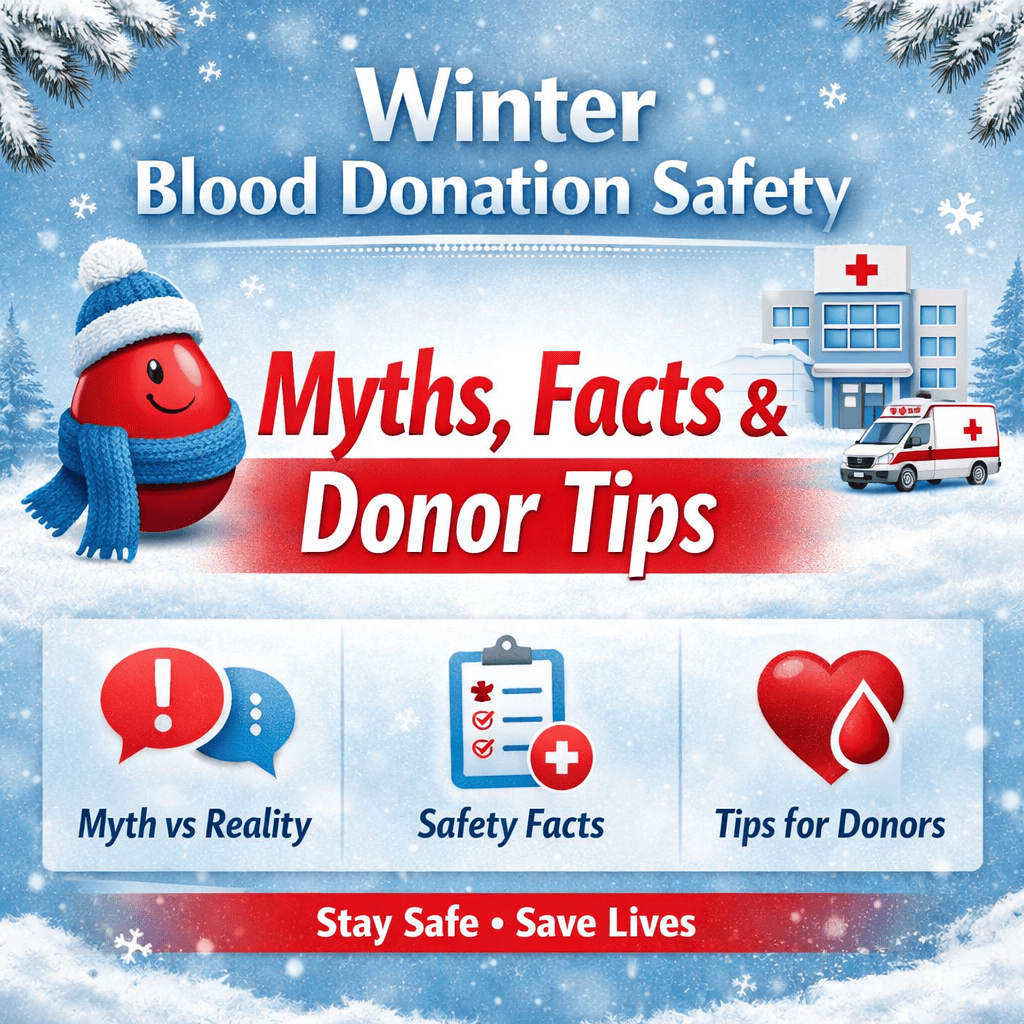
Winter often brings a drop in blood donations, even though the demand for blood remains constant in hospitals. Many people hesitate to donate during cold weather due to common myths about weakness, illness, or safety concerns. The truth is—blood donation is completely safe in winter if basic health guidelines are followed. In fact, donating blood during winter is more important than ever.
Let’s clear the doubts and share the facts you should know before donating blood in winter.
Why Blood Donation Drops in Winter
During winter months, blood banks often face shortages. The main reasons include:
-
Cold weather reducing outdoor activities
-
Fear of catching a cold or flu
-
Misconceptions about weakness after donation
-
Fewer blood donation camps
However, medical emergencies, surgeries, accidents, and treatments like cancer care continue year-round. This makes winter blood donation critical for saving lives.
Is It Safe to Donate Blood in Winter?
Yes, absolutely. Blood donation is safe in winter as long as you meet the eligibility criteria and are in good health. Cold weather does not affect the blood donation process or your body’s ability to recover.
Blood donation centers follow strict hygiene and safety protocols throughout the year, including winter. Sterile equipment, trained professionals, and proper post-donation care ensure donor safety.
Who Should Avoid Donating Blood in Winter?
While winter donation is safe, you should temporarily avoid donating if:
-
You have a fever, cold, cough, or flu
-
You’re recovering from an infection
-
You feel weak or dehydrated
Once you fully recover, you can safely donate blood again. Being honest about your health protects both you and the recipient.
Benefits of Donating Blood in Winter
Donating blood during winter has several benefits:
-
Helps hospitals manage seasonal blood shortages
-
Supports emergency cases caused by accidents and illnesses
-
Encourages a culture of year-round voluntary donation
-
Saves up to three lives with one donation
Your single act can make a life-saving difference when blood supplies are low.
How to Prepare for Blood Donation in Winter
Proper preparation ensures a smooth and safe donation experience:
1. Stay Warm
Dress comfortably and keep yourself warm before and after donation to avoid chills.
2. Eat a Healthy Meal
Have a balanced meal rich in iron and protein. Include foods like spinach, lentils, eggs, fruits, and whole grains.
3. Stay Hydrated
People often drink less water in winter. Drink enough fluids before donating to prevent dizziness.
4. Get Enough Rest
A good night’s sleep helps your body recover faster after donation.
What to Do After Donating Blood in Cold Weather
Post-donation care is important, especially in winter:
-
Rest for 10–15 minutes after donation
-
Drink warm fluids if possible
-
Avoid heavy exercise for 24 hours
-
Keep the donation site clean and covered
Most donors can resume normal activities the same day.
Common Myths About Winter Blood Donation
Myth: Donating blood in winter weakens immunity
Fact: Blood donation does not reduce immunity in healthy individuals.
Myth: You’ll fall sick after donating blood
Fact: Properly screened donors recover quickly without health issues.
Myth: Winter blood is not suitable for patients
Fact: Blood quality remains the same regardless of season.
How Blood Donation Apps Help in Winter
Blood donation apps play a crucial role during winter by:
-
Connecting donors and patients faster
-
Sending emergency blood requests
-
Reducing response time during shortages
-
Building a reliable donor community
With fewer camps in winter, digital platforms ensure help reaches those in need without delay.
Final Thoughts
Blood donation in winter is safe, necessary, and life-saving. If you’re healthy and meet the eligibility criteria, don’t let cold weather stop you from helping someone in need. Hospitals rely heavily on voluntary donors, especially during winter months.
Your decision to donate blood today could be someone’s hope for tomorrow.