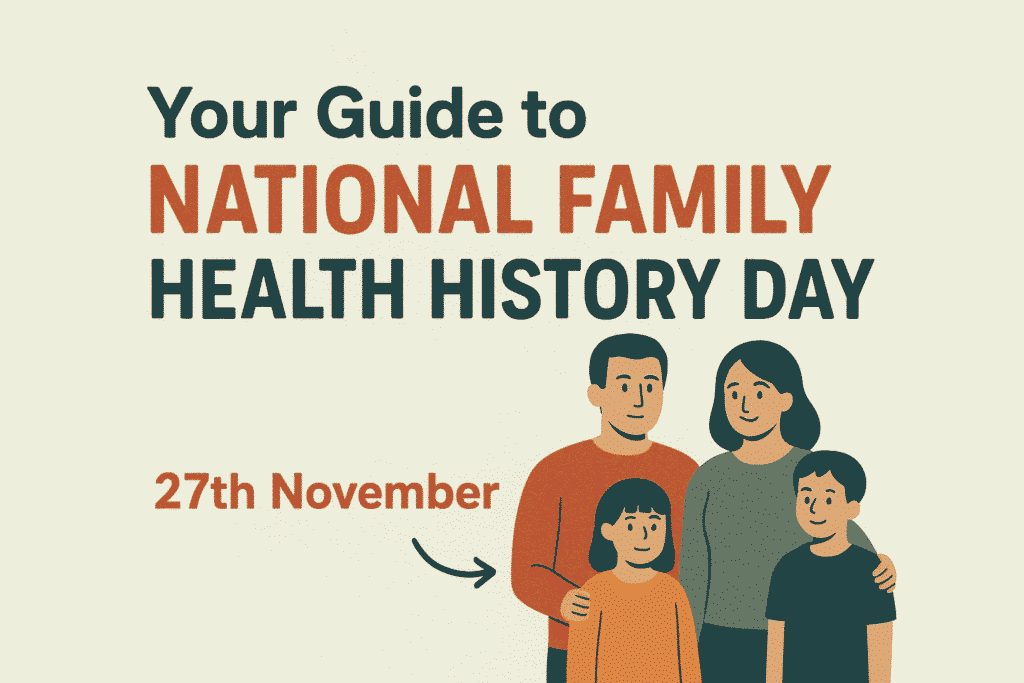
Every year on 27th November, the United States recognizes National Family Health History Day, an observance that takes place during Thanksgiving—a time when families gather, connect, and share traditions. But beyond the joy of food and reunion, this day encourages something even more meaningful: understanding your family’s health story.
While many people know their family tree, far fewer know their family medical tree—a factor that can literally shape their future well-being. National Family Health History Day serves as an important reminder to start essential conversations that can save lives.
Why Family Health History Matters
Your family’s health history is one of the strongest predictors of your own health risks. Genetics, environment, lifestyle habits, and shared behaviors all play a role in shaping disease patterns across generations.
Knowing your family’s health background helps in:
1. Identifying Inherited Risk Factors
Conditions like diabetes, heart disease, hypertension, cancer, obesity, Alzheimer’s, and certain autoimmune disorders often run in families. A documented family health history helps identify whether you are at higher-than-average risk.
2. Early Detection and Prevention
If you know your parent or grandparent had high blood pressure at a young age, you may take preventive steps earlier. Regular screenings, healthier habits, and doctor consultations become more targeted and effective.
3. Guiding Doctors for Better Care
Healthcare professionals rely on accurate family history to recommend tests, design personalized care plans, or suggest lifestyle modifications. The more detailed your history, the better your preventive care becomes.
4. Preparing Future Generations
Family health history doesn’t just help you—it helps your children and grandchildren understand their potential risks, too.
Why Thanksgiving Is the Perfect Time to Discuss It
Thanksgiving is when extended families come together, making it the ideal moment to gather meaningful health information.
Here’s why it works:
-
Families are already talking and sharing stories.
-
Multiple generations are present in one place.
-
There is time and comfort to have open conversations.
-
It promotes bonding and awareness instead of fear or discomfort.
Taking a few minutes during these gatherings to ask questions can turn a simple conversation into life-changing knowledge.
What to Ask When Collecting Family Health History
If you are starting today, focus on these areas:
Major chronic illnesses
Heart disease, diabetes, asthma, arthritis, chronic kidney disease, etc.
Genetic conditions
Like sickle cell anemia, thalassemia, cystic fibrosis, or inherited cancers.
Mental health conditions
Depression, anxiety, bipolar disorder, etc.
Lifestyle factors
Smoking, diet patterns, alcohol use.
Age of diagnosis
Health conditions diagnosed early often indicate stronger genetic links.
Causes of death in relatives
This helps doctors understand potential inherited risks.
Record information about parents, siblings, children, grandparents, aunts/uncles, and cousins.
How to Document Your Family Health History
You can use:
-
A simple notebook
-
A digital spreadsheet
-
Online tools like the U.S. Surgeon General’s My Family Health Portrait
-
A health-tracking app
Keep updating this information as family members age or health conditions evolve.
Tips for Having the Conversation Comfortably
-
Start with empathy: “I want to understand our health better.”
-
Normalize the topic—health conversations aren’t taboo.
-
Assure privacy and respect.
-
Let elders share stories naturally.
-
Avoid forcing anyone to disclose sensitive details.
Remember, the goal is awareness, not pressure.
Take Action This National Family Health History Day
On 27th November, take a step that could change your family’s future. Start with one conversation, one question, or one note—small steps lead to big impacts.
This Thanksgiving, celebrate not just with food and gratitude, but with the gift of knowledge, prevention, and long-term wellness.