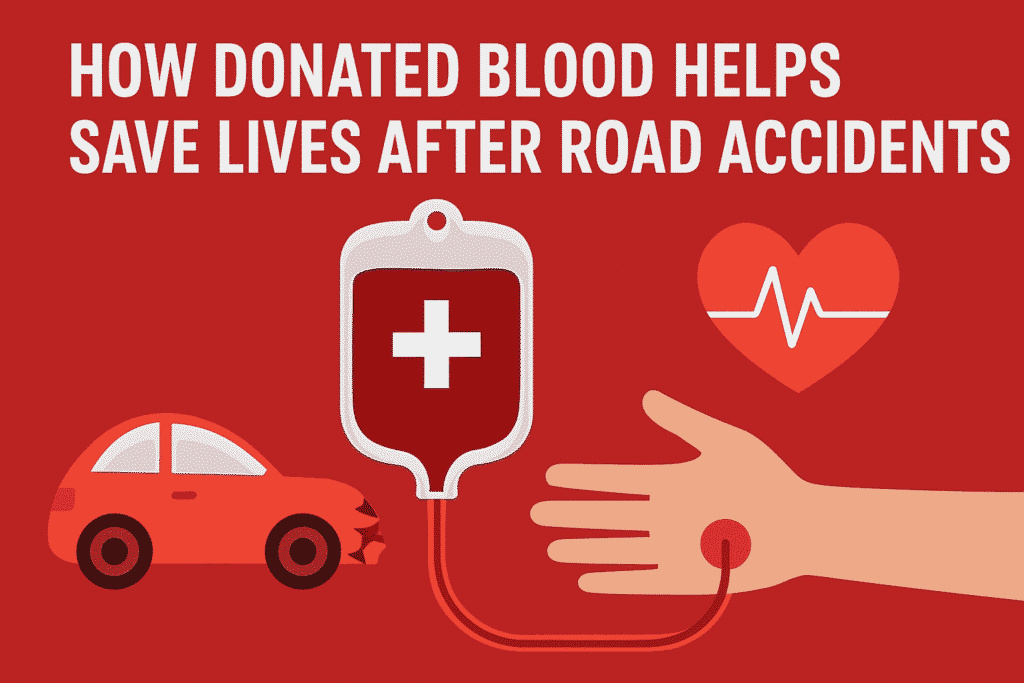
Road accidents are among the leading causes of medical emergencies across the world, and India is no exception. Every year, thousands of people suffer severe injuries due to collisions, crashes, and unexpected mishaps on highways and city roads. In many of these cases, the difference between life and death often depends on one critical resource—blood. While advancements in medical technology have improved trauma care, the immediate availability of blood remains a lifesaving factor that cannot be substituted by any machine or artificial alternative.
This is where the importance of regular voluntary blood donation becomes clear. It ensures that hospitals and trauma centers have enough supply to handle emergencies, especially road accident cases that require urgent transfusions.
Why Road Accident Victims Need Blood Urgently
When a person suffers a major accident, the most common medical threat is excessive blood loss, known as hemorrhage. Rapid loss of blood leads to a drop in blood pressure, reduced oxygen supply to vital organs, and ultimately organ failure. To stabilize the patient, doctors must restore lost blood quickly.
In emergency situations:
-
A single victim may require up to 4–6 units of blood, sometimes even more.
-
Patients with internal bleeding may need multiple transfusions over several hours.
-
For complex surgeries, such as those involving the brain or major arteries, blood components like plasma, platelets, and packed red cells become essential.
Having immediate access to a ready blood supply can allow doctors to begin treatment without delay, increasing survival chances dramatically.
The Link Between Blood Banks & Emergency Care
Blood banks play a crucial role in ensuring that emergency rooms are always prepared for unpredictable cases. However, even the best-equipped blood banks rely entirely on voluntary donors to maintain a sufficient stock.
In many Indian cities, road accident cases spike during weekends, festive seasons, and night hours. Without regular donations, hospitals risk facing shortages at critical moments.
A reliable blood supply helps emergency care teams:
-
Begin transfusions instantly
-
Perform life-saving surgeries without waiting
-
Treat multiple accident victims at once
-
Manage trauma cases more efficiently
For hospitals along highways or in high-traffic zones, maintaining a consistent blood inventory is non-negotiable.
Blood Components Needed in Road Accident Cases
Not all emergencies require whole blood. In road accident trauma care, doctors often use specific blood components depending on the patient’s condition:
1. Red Blood Cells (RBCs)
Used to treat major blood loss and restore oxygen supply.
2. Plasma
Vital for controlling internal bleeding, especially when blood clotting factors drop.
3. Platelets
Required when the patient’s clotting ability is compromised.
4. Cryoprecipitate
Helps manage severe bleeding in critical injuries.
The availability of all these components depends on regular donations because they have different shelf lives—platelets last only 5 days, plasma lasts months, and RBCs last around 42 days.
How Regular Blood Donation Supports Road Accident Preparedness
Blood donation is more than a noble act—it is a foundation of emergency readiness. Here’s how regular donors help accident victims:
1. Builds a Continuous Flow of Stock
A predictable donor base ensures blood banks never run empty.
2. Helps Hospitals Handle Bulk Emergencies
Major accidents involving multiple victims require large quantities of blood. Preparedness prevents delays.
3. Reduces Mortality Rates
Timely transfusions during the “golden hour” significantly improve survival chances.
4. Supports Rare Blood Group Requirements
People with rare blood groups depend entirely on voluntary donors for emergency transfusions.
How You Can Make a Difference
Becoming a blood donor is one of the simplest ways to contribute to public health and emergency care systems. One unit of donated blood can save up to three lives, as it is separated into components.
You can help by:
-
Donating blood every 3 months (men) and 4 months (women)
-
Encouraging friends and colleagues to become donors
-
Participating in blood donation drives
-
Adding your name to emergency or rare blood group donor lists
Your contribution ensures that accident victims—people you may never meet—get a second chance at life.
Raising Awareness Is the Key
Many people still hesitate to donate due to myths, fear, or lack of knowledge. It’s essential to promote awareness about how safe, simple, and impactful blood donation is. Social initiatives, community programs, NGOs, corporates, and healthcare institutions must work together to build a culture where donating blood regularly becomes normal.
With rising road traffic and increasing accident rates, the need for emergency blood support is more urgent than ever. Every donation counts, and every donor plays a vital role in strengthening the healthcare system.
Conclusion
Road accidents are unpredictable and often devastating, but timely access to blood can turn a critical situation into a survivable one. Blood donation is not just an act of kindness—it is a lifeline for thousands of emergency patients. By donating regularly, you contribute to a safer, more prepared, and more compassionate society.