Anemia is a common blood-related condition that occurs when the body does not have enough healthy red blood cells or hemoglobin to carry adequate oxygen to tissues. Since oxygen is essential for energy production and organ function, anemia can make a person feel tired, weak, and unwell. It affects people of all ages and can range from mild to severe depending on the cause and duration.
What Is Anemia?
Red blood cells contain hemoglobin, an iron-rich protein that binds oxygen in the lungs and delivers it throughout the body. Anemia develops when:
-
The body produces fewer red blood cells
-
Red blood cells are destroyed faster than they are made
-
Hemoglobin levels are lower than normal
When oxygen delivery decreases, organs and muscles cannot function efficiently, leading to various symptoms.
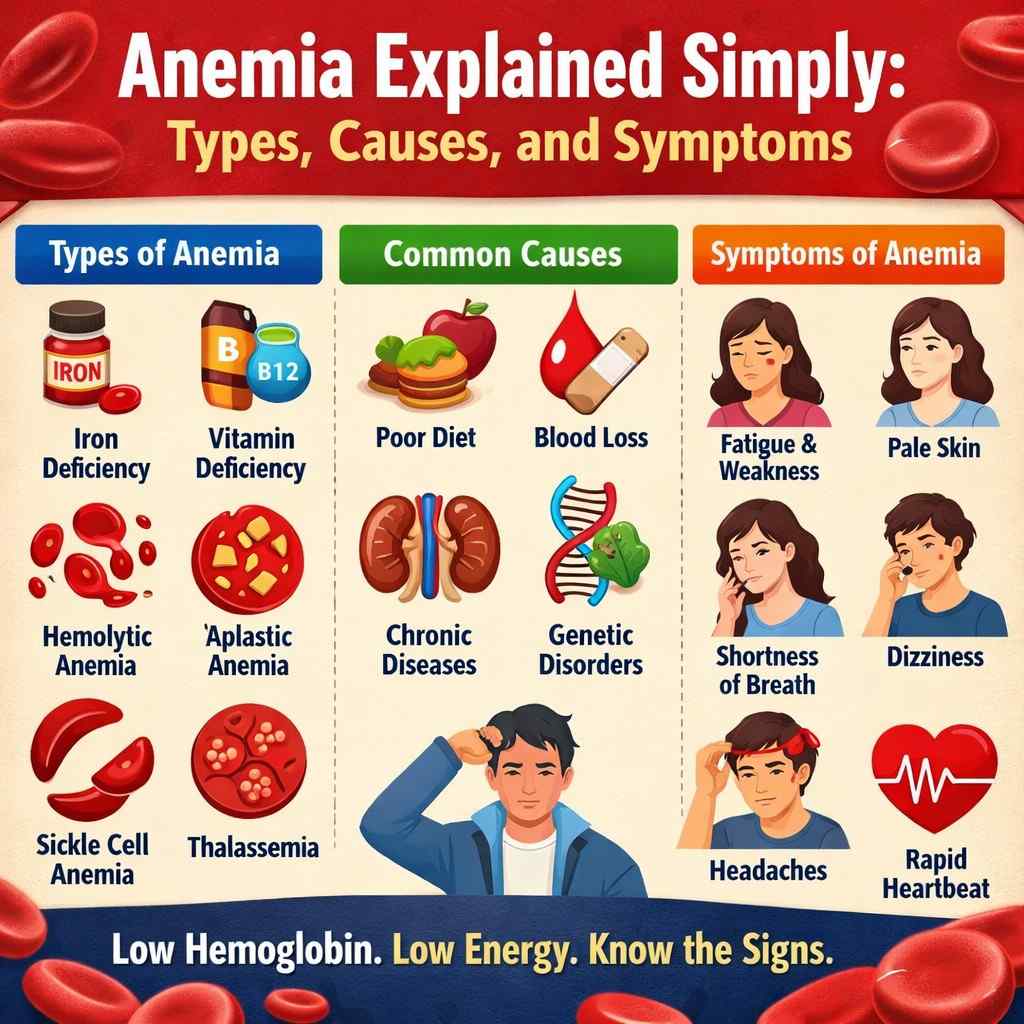
Types of Anemia
There are several types of anemia, each with different causes:
1. Iron-Deficiency Anemia
This is the most common type of anemia. It occurs when the body lacks enough iron to produce hemoglobin. It is often seen in children, women of reproductive age, and people with poor dietary intake.
2. Vitamin Deficiency Anemia
This type occurs due to a lack of vitamin B12 or folate, both essential for red blood cell production. It can result from poor diet, absorption problems, or certain medical conditions.
3. Anemia of Chronic Disease
Long-term illnesses such as kidney disease, cancer, infections, or autoimmune disorders can interfere with red blood cell production, leading to anemia.
4. Hemolytic Anemia
In this condition, red blood cells are destroyed faster than the body can replace them. It may be inherited or caused by infections, medications, or autoimmune reactions.
5. Aplastic Anemia
A rare but serious form of anemia where the bone marrow fails to produce enough blood cells. It can be caused by infections, exposure to toxins, or immune system disorders.
6. Inherited Anemias
Conditions such as sickle cell anemia and thalassemia are genetic disorders that affect the structure or production of hemoglobin.
Causes of Anemia
Anemia can develop due to one or more of the following reasons:
-
Poor nutrition, especially low intake of iron, vitamin B12, or folate
-
Blood loss, such as heavy menstrual bleeding, injuries, surgery, or gastrointestinal bleeding
-
Chronic diseases affecting kidney function or bone marrow
-
Genetic conditions passed from parents to children
-
Infections or autoimmune disorders that destroy red blood cells
-
Pregnancy, where iron requirements increase significantly
Identifying the underlying cause is essential for proper treatment.
Symptoms of Anemia
Symptoms of anemia may vary depending on severity and how quickly it develops. Common signs include:
-
Constant fatigue or weakness
-
Pale skin, lips, or nail beds
-
Shortness of breath, especially during physical activity
-
Dizziness or lightheadedness
-
Headaches
-
Cold hands and feet
-
Rapid or irregular heartbeat
In severe cases, anemia may cause chest pain, fainting, or difficulty concentrating.
Who Is at Risk?
People at higher risk of anemia include:
-
Women with heavy menstrual cycles
-
Pregnant women
-
Infants and young children
-
Elderly individuals
-
People with chronic illnesses
-
Individuals with poor dietary habits
Regular health checkups and blood tests help in early detection.
Conclusion
Anemia is a widespread condition that can significantly affect quality of life if left untreated. Understanding its types, causes, and symptoms is the first step toward prevention and timely care. Most forms of anemia can be effectively managed through proper nutrition, medical treatment, and lifestyle changes once the cause is identified. If symptoms persist, consulting a healthcare professional and undergoing blood tests can help ensure accurate diagnosis and appropriate treatment.